Girls’ Education in India: Barriers, Progress, and How TARA Acts
Education is the most powerful tool for transforming a girl’s future. In India, significant progress has been made in recent decades, yet millions of girls still face barriers that prevent them from completing their schooling. At TARA India, keeping girls in education is our primary protection strategy.
This page explores the state of girls’ education in India today, the national frameworks that support it, the social obstacles that remain, and how TARA’s programmes, in alignment with government policy, work to keep girls learning in South Delhi.
Sources : NFHS-5 (2019-21) · UDISE+ 2024-25, Ministry of Education · NSO 2021
The National Family Health Survey (NFHS) is India’s most comprehensive health and nutrition survey, conducted by the Ministry of Health every 4-5 years and used as reference by the WHO, UNICEF and the Indian government.
Our core belief
Education is the foundation of every girl’s future
India’s national frameworks, from the Right to Education Act to Beti Bachao Beti Padhao and Mission Vatsalya, place girls’ education at the centre of child protection policy. TARA acts in full alignment with these child protection priorities, providing daily educational support and family intervention to keep girls in school in South Delhi.
The National Framework for Girls’ Education in India
India has built a strong legal and policy foundation to guarantee girls’ right to education. TARA’s programmes are developed in direct alignment with these frameworks, working alongside government mechanisms in South Delhi.
Guarantees free and compulsory education for all children aged 6 to 14, with specific provisions to support girls’ enrolment and retention in school.
A national programme launched in 2015 to address gender-biased sex selection and promote girls’ education, improving enrolment and reducing dropout rates across India.
An integrated school education scheme covering pre-primary to Class 12, with targeted interventions to improve gender parity and learning outcomes across all levels.
Sets a target of 100% Gross Enrolment Ratio across all school levels by 2030, with a strong focus on equity, inclusion, and retention of girls at secondary level.
Why Girls Still Drop Out of School
Despite national progress, girls in dense urban settlements and migrant communities face a specific set of obstacles that make staying in school difficult. These barriers are interconnected and require localised, relationship-based responses.
How TARA Keeps Girls in School in South Delhi
Since 2008, TARA has developed a continuum of educational support aligned with national child protection policy. Our approach addresses not just learning, but the full ecosystem that determines whether a girl stays in school.
- Daily academic support in English, Hindi and Maths at TARA Outreach Centres
- Girls’ groups specifically preventing early marriage and school dropout
- Home visits and family counselling to address dropout risk early
- Health screenings and nutrition support removing physical barriers to learning
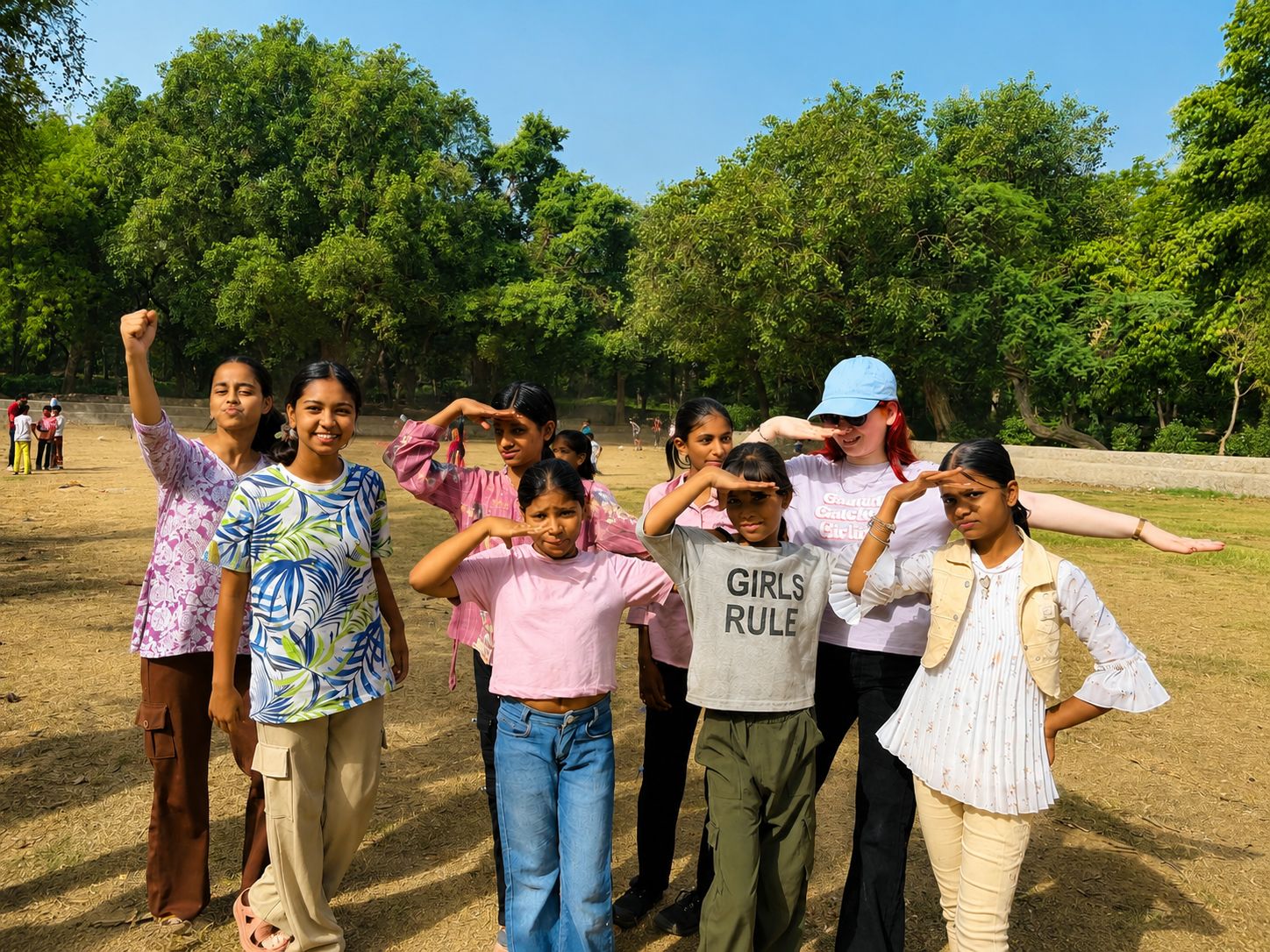
- Confidence-building activities that make school a place girls want to be
- Continued education support at TARA Girls Home for girls in residential care
📖 Story from the field
Sonarika passes her exams — despite everything
At 16, Sonarika is a bright, spirited resident of TARA Girls Home. This year, she achieved something remarkable: passing her Class 10 board exams with 68%, despite undergoing major surgery and missing several months of school. Her determination helped her continue her academic journey with renewed motivation. Beyond her studies, she teaches dance to younger girls and leads by example every day.
✏️ Name changed for privacy. Story from TARA Impact Assessment 2024-25. Keeping a girl in school changes everything. Your sponsorship makes stories like Sonarika’s possible.
TARA Girls: Board Exam Results
Girls at TARA Girls Home attend English-medium schools and receive daily academic support. Their board exam results reflect years of consistent care, individual tutoring, and a belief that every girl can succeed — regardless of the circumstances she came from.
Our Approach to Girls’ Education
TARA’s educational programmes are built on a simple insight: learning outcomes improve when the whole child is supported. We address academic needs alongside health, safety, family stability, and emotional wellbeing, in alignment with India’s child protection and education frameworks.
Structured daily sessions in English, Hindi and Maths at our outreach centres, with individual follow-up for children falling behind.
Regular home visits and family counselling to identify dropout risk early and work with parents as partners in their daughter’s education.
Arts, sports, group activities and leadership opportunities that build self-confidence and make education a positive, empowering experience.
Health camps, nutrition support, and hygiene education that remove physical barriers to regular school attendance.
Progress and What Lies Ahead
India has made remarkable strides in girls’ education. Female literacy has risen from 54% (Census 2001) to 70.3% (NSO, 2021). Girls’ secondary school completion improved from 73.5% to over 80% between 2019 and 2024 (UDISE+). The Gender Parity Index now exceeds 1.0 at all school levels nationally, meaning girls are enrolling at equal or higher rates than boys (UDISE+ 2024-25). Government programmes such as Beti Bachao Beti Padhao and Samagra Shiksha have been instrumental in this progress. TARA contributes to these national goals at the community level, ensuring no girl in South Delhi is left behind.
Female literacy at 70.3%, up from 54% in 2001 (Census / NSO).
Gender Parity Index above 1.0 at all school levels nationally (UDISE+ 2024-25).
TARA’s work with families builds lasting change from within communities.
Support Girls’ Education in India
Every girl deserves the chance to learn, grow, and shape her own future. Help TARA keep girls in school in South Delhi.
TARA India is a registered child protection NGO in Delhi, working since 2008 to protect vulnerable children and promote girls’ education in South Delhi.