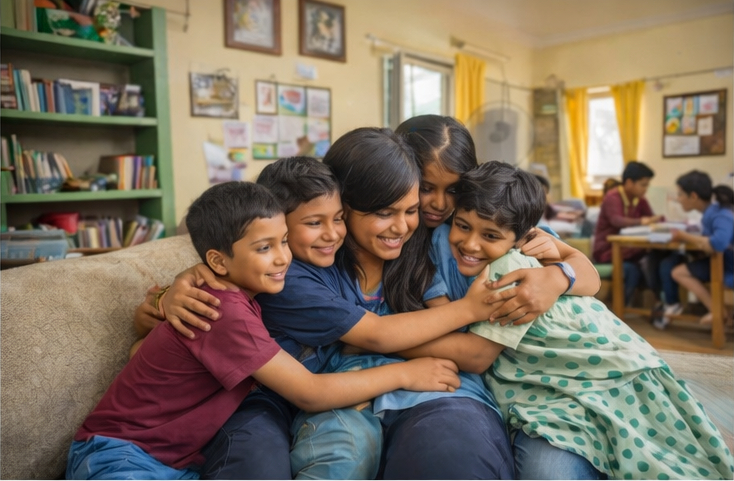
Delhi is home to thousands of vulnerable children. Many are orphaned, abandoned, or at risk of abuse. Others live in communities where poverty and school dropout threaten their future. This is why child NGOs in Delhi matter. They bridge the gap between vulnerable children and the protection, education and care they deserve. TARA has been doing this work since 2008.
What does a child NGO in Delhi do?
A child NGO works in partnership with government frameworks to protect, educate, and empower vulnerable children. In Delhi, child NGOs complement public services by reaching children in underserved communities who may require additional support alongside institutional care, formal schooling, and family networks.
In practice, child NGOs contribute across several areas. They support children in need of care and protection, strengthen families through counselling and community services, promote school retention and learning, and help young people transition successfully into adulthood.
The most effective child NGOs in Delhi comply fully with Indian law, including the Juvenile Justice (Care and Protection of Children) Act, 2015 and the Protection of Children from Sexual Offences (POCSO) Act, 2012. They work in close collaboration with statutory authorities such as the Child Welfare Committee, the Department of Women and Child Development, schools, healthcare providers, and local communities as part of India’s broader child protection system.
Why is child protection so urgent in Delhi?
Delhi is one of India’s most densely populated and rapidly growing cities. Large migrant communities live across South and East Delhi, and ensuring access to education, healthcare, child protection services, and safe living conditions remains an ongoing priority.
Several factors can contribute to child vulnerability, including economic hardship, family stress, migration, and social pressures. Child labour and school dropout remain significant challenges addressed jointly by government agencies and civil society organisations. Girls may also face additional risks, including early marriage, gender discrimination, and gender-based violence.
Child protection requires coordinated action between families, communities, government institutions, schools, healthcare providers, and civil society organisations. Child NGOs contribute by providing specialised support, strengthening family environments, and helping children access the services and opportunities they need to thrive.
According to UNICEF, access to education, healthcare, protection, and supportive family environments remains essential for children’s long-term development and wellbeing.
How TARA works as a child NGO in Delhi
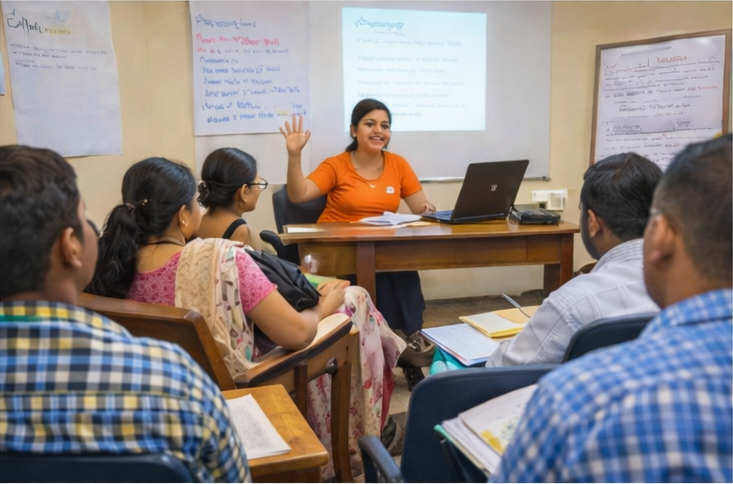
TARA works alongside government authorities, communities, families, and educational institutions to support children in need of care and protection. Our approach combines direct support for vulnerable children with preventive interventions that strengthen families and communities.
Through TARA Boys and TARA Girls, we provide family-like residential care for children admitted through legal procedures under the Juvenile Justice framework. Each home offers a safe environment, access to education, healthcare, psychosocial support, and opportunities for personal development.
In the community, our Outreach Centres in Saidulajab and Sanjay Colony provide educational support, life-skills activities, health monitoring, and family counselling. These services help children remain connected to their families and communities while accessing opportunities for learning and growth.
TARA works in close collaboration with the Child Welfare Committee and other statutory authorities. Our Family Intervention Programme and aftercare services help children, young people, and families access long-term support and opportunities for independence.
What makes a child NGO trustworthy?
Not all child NGOs in Delhi operate to the same standard. When evaluating an NGO to support — whether as a donor, volunteer, or CSR partner — it is important to look for transparency, legal compliance, and a genuine child-rights approach.
A trustworthy child NGO in Delhi will be registered under Indian law, publish annual impact reports, have independently audited accounts, comply fully with the Juvenile Justice Act and POCSO Act, and be licensed by the Department of Women and Child Development.
TARA meets all of these standards. We are registered as ONYVA, a public trust under Indian law. Donations are eligible for 80G tax deduction in India, and for tax benefits in France, the United States, and the United Kingdom. In 2026, TARA was recognised as the Grassroots Changemaker of the Year by the Times of India Foundation.
Since 2022, TARA has partnered with Guardians of Dreams to promote quality care standards in children’s homes across the subcontinent.
Sources: UNICEF State of the World’s Children; Ministry of Women and Child Development, Government of India; Juvenile Justice (Care and Protection of Children) Act, 2015; Protection of Children from Sexual Offences (POCSO) Act, 2012.
Support a trusted child NGO in Delhi
TARA has been protecting and educating vulnerable children in Delhi since 2008. Whether you are an individual donor, a company looking for a CSR partner, or someone who wants to volunteer — there is a place for you in TARA’s story.